WHY DOES A STARSEED RELATE TO DEATH DIFFERENTLY?
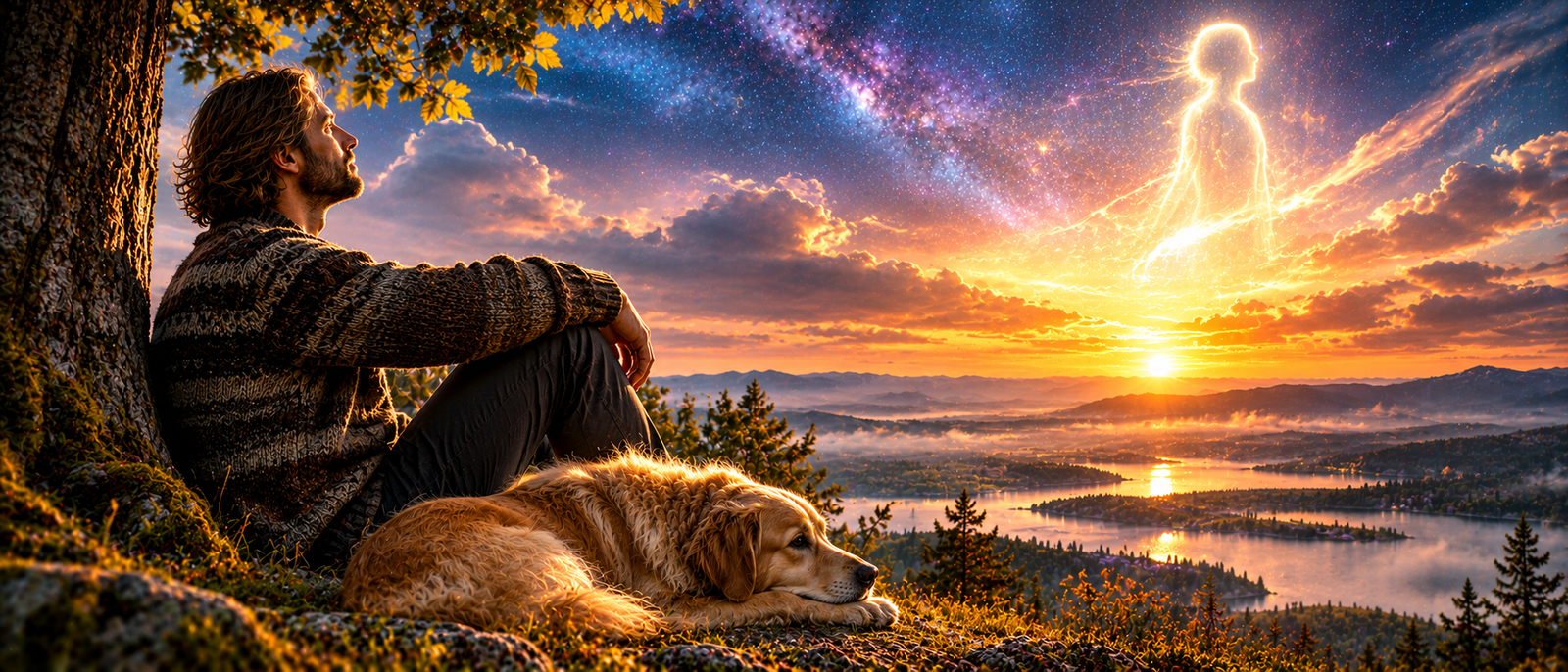
A Starseed relates to death in a way that differs from many common beliefs in society. To them, death is not only the end of physical life but part of a greater whole of existence. They carry a deep sense that a person’s true essence is not limited to the body, a name or the amount of time spent in this world. Physical life is one stage of the soul’s journey, and death does not mean that everything a person truly is simply disappears.
From an early age, a Starseed may reflect on the limits of life and what happens after death. While death is often avoided or spoken about only as a loss, they search for a deeper understanding of its meaning. They are interested in the nature of consciousness, the continuity of the soul and the question of why a person is born into this world only to leave it one day. To them, life and death are not separate events but two different sides of the same existence.
A Starseed understands that everything in the physical world is constantly changing. The human body grows older, nature renews itself and every stage of life eventually comes to an end. Nothing visible remains unchanged forever. This does not make life less valuable. It makes it even more meaningful. They recognize that the purpose of life is not to hold on to everything forever but to learn to live fully within the time that has been given.
Facing death does not make a Starseed emotionless or remove the pain of loss. When someone they love leaves their life, they feel grief, longing and emptiness just as deeply as anyone else. They miss the familiar voice, the touch, the shared conversations and the ordinary moments whose value is sometimes understood only after they are gone. Even if they trust in the continuity of the soul, they know that spiritual understanding does not replace physical closeness or remove the need to grieve.
A Starseed does not see the fear of death as weakness either. They understand that people have a natural need to preserve life and protect themselves and those they love. Thinking about death brings up questions about unfinished things, letting go and everything that may remain unlived. They do not try to deny these feelings but to face them as part of being human. Courage does not mean the absence of fear. It means accepting the limits of life without allowing that fear to control every moment.
Their relationship with death also changes through life experience. Loss, hardship and facing their own vulnerability teach them how quickly everything familiar can change. They understand that tomorrow is promised to no one and that many things people consider important lose their meaning in the face of life’s deepest questions. Status, possessions and outside approval cannot replace the moments in which a person has been able to love and be loved.
A Starseed begins to see the understanding of death above all as an invitation to live more consciously. They do not want to spend their life endlessly waiting, carrying bitterness or leaving their most important words unspoken. They understand how valuable it is to apologize, show love and be truly present while the opportunity exists. The meaning of life is not created only through great achievements but also through small moments that leave a lasting mark on another person’s heart.
The continuity of the soul is a deep inner conviction for a Starseed. They feel that love, consciousness and the connection between people are not limited only to physical reality. Still, they understand that not every mystery of existence needs to be solved in this lifetime. Thinking about what may exist after death should not take attention away from the life they are living now. Their purpose is not to hurry toward the next stage of existence but to give this life the value it deserves.
Gradually, a Starseed understands that accepting death does not mean giving up on life. It means developing a deeper respect for all living things. They learn to appreciate ordinary mornings, the presence of loved ones and moments that may look insignificant from the outside. They know that every encounter is unique and that the same moment will never return in exactly the same form.
In the end, their relationship with death says more than anything about their relationship with life. They do not want simply to collect years. They want to leave behind something that remains in the hearts of others. They understand that a person’s meaning is not measured by how long they lived but by the love, kindness and understanding they brought into the world while they were here.
You have been taught that death takes away everything you have loved during your life. That the final breath ends the shared story and leaves behind only memories of what once was. But love does not cease to exist the moment you can no longer see another person beside you. Their words continue to live in your thoughts, their actions continue to influence your choices and their love has changed you in a way that even death cannot erase.
Every person you have truly loved has left something of themselves within you. And every person you have loved carries something of you with them. That is why the most important thing is not to spend your life fearing that everything will one day end. What matters is understanding how much meaning lies in what you do before that day comes. Death may end the time you share in this world but it does not erase what love has created.
And when your own time here eventually comes to an end, what remains will not be how much you owned, how high you rose or how many people knew your name. What remains is what your presence meant to the people whose lives you touched. Because in the end, the deepest question of life is not what happens to us after death but how deeply we truly lived and loved before it.